Business Websites & Redesign
I rebuild structure, design and development around what a visitor needs to understand before enquiring.
Business websites, online schools and e-commerce: structure, design and development in one pair of hands — from first prototype to launch and support.
Case studies with the platform and the problem solved for each — full portfolio on the next page.
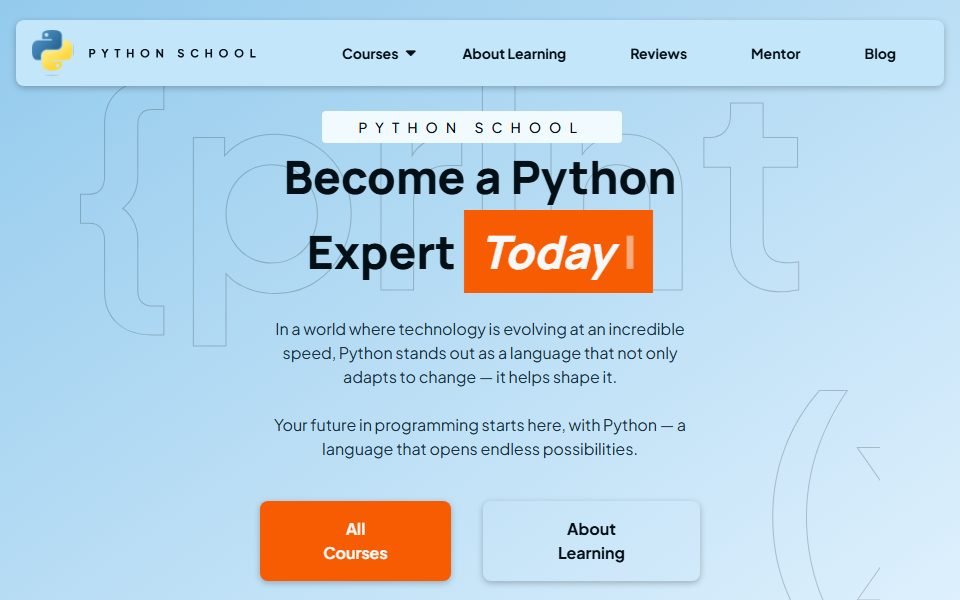 # Featured caseAlpha School — Python Courses PlatformAn online education platform — a course catalog by skill level, student reviews, a mentor profile and a blog, plus a merch store. A live site with 6,000+ enrolled students.View live site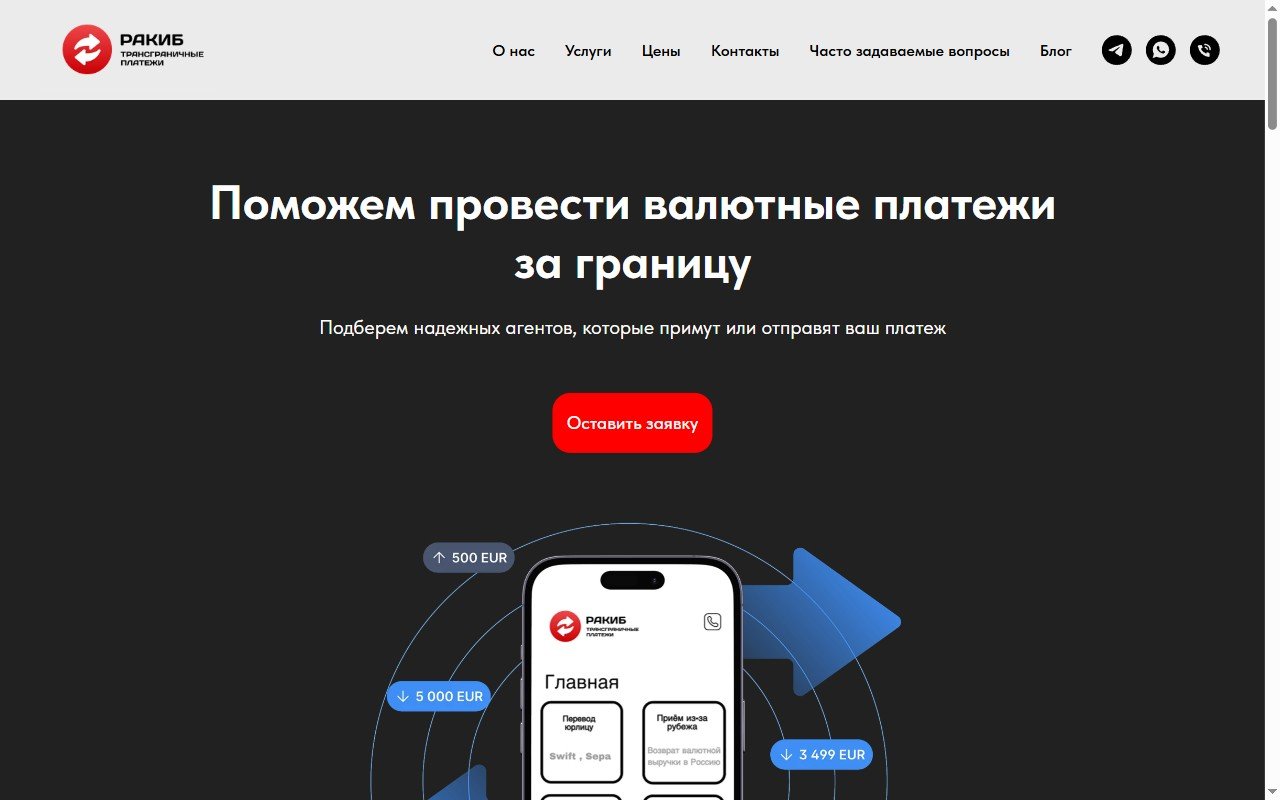
Service page for a cross-border B2B payments broker that matches clients with vetted payment agents — settlement in USD, EUR, CNY, AED and crypto, with a process walkthrough, trust signals, an FAQ accordion, and a callback form.
View case study View live site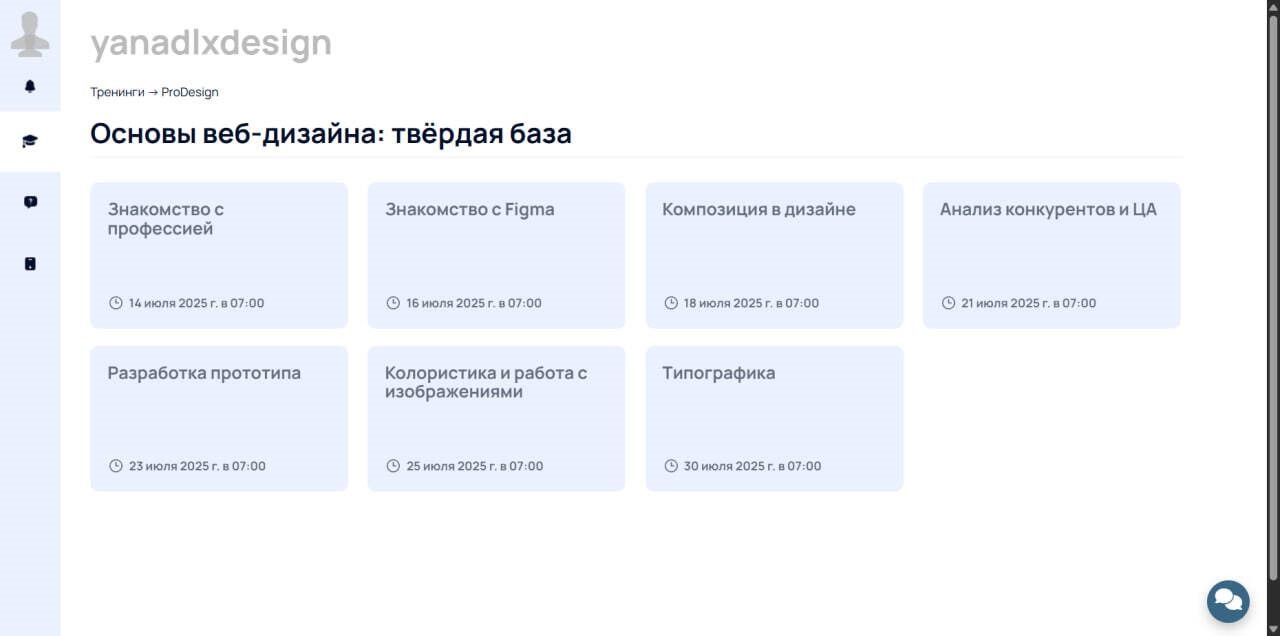
A branded student cabinet for a web-design school — a two-month core course, a weekly intensive and a free intro track. Lesson pages built around a timeline and homework, custom-designed in the builder down to the mobile view.
View case study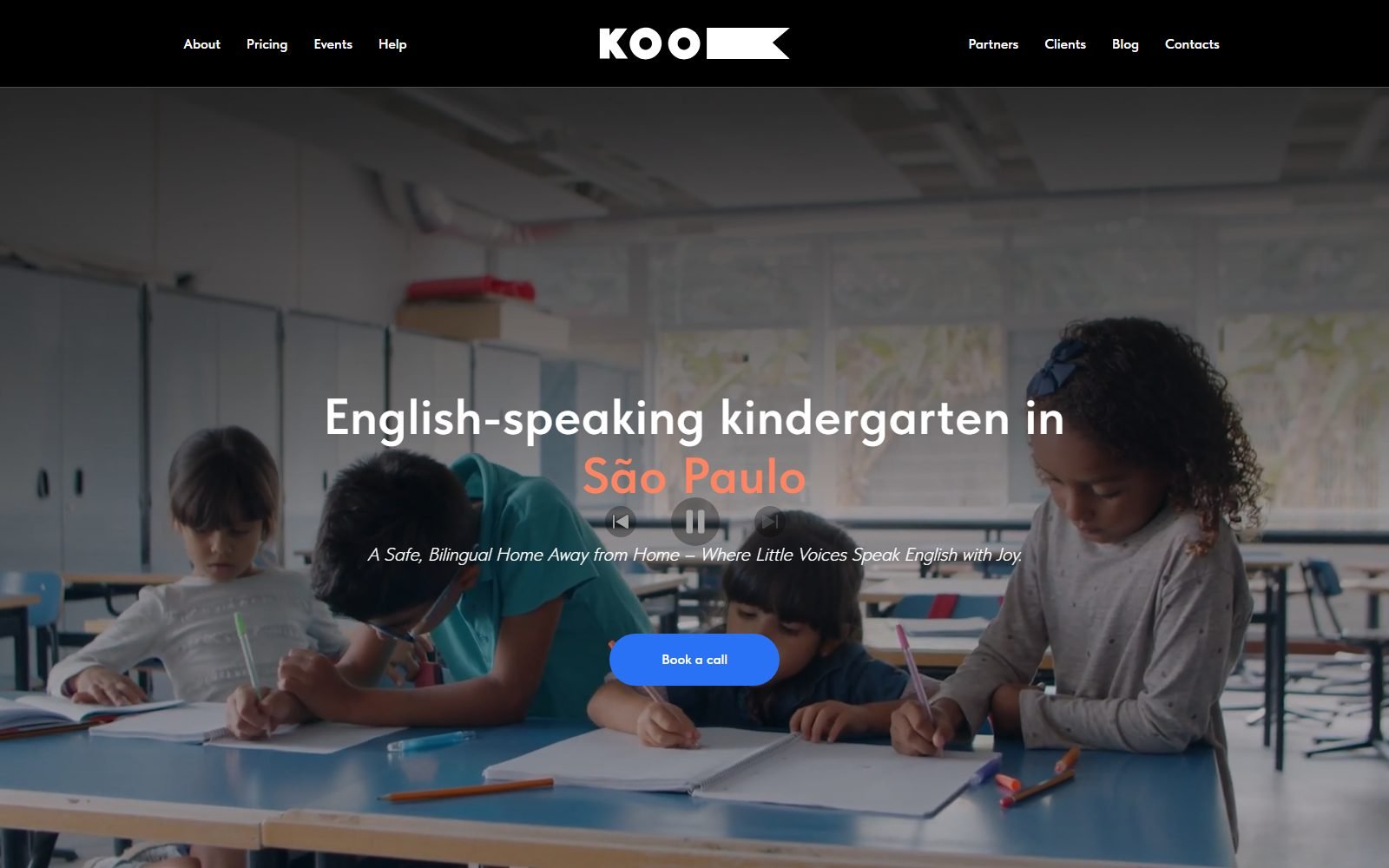
Landing page for a bilingual English-immersion kindergarten in São Paulo — a consultation-booking form and a warm, parent-focused value proposition.
View case study View live siteJump straight to:Online schoolsBusiness websitesLanding pages
One person runs the project from first prototype to launch — and stays available after.
I rebuild structure, design and development around what a visitor needs to understand before enquiring.
Courses, student cabinets and education platforms — from the learning structure to the student interface.
Catalog, cart, payments and integrations — without you having to figure out which CMS or framework you need.
Not sure which platform you need? You don't have to be: describe the task and I'll suggest the right stack, budget and timeline.
Full adaptive design in Figma before a line of code — built around conversion, not just looks, on landing pages and stores especially.
Fast-turnaround promo pages on Tilda or Webflow when speed to launch matters more than deep customization.
Moving a site off a page builder onto maintainable code, or between platforms, without losing SEO standing.
Semantic markup, meta tags, sitemap, and page-speed basics handled at launch — every site ships search-ready.
Hacked or infected WordPress site? I clean out malware, patch the entry point, and harden it against reinfection.
Fixes, updates, and speed improvements for sites I built or inherited from someone else.
An ongoing paid plan for a fixed monthly rate — updates, backups, monitoring, and small fixes handled without a new quote every time.
Community discussion boards and knowledge-base wikis, set up and themed to match the rest of the site.
Link-in-bio pages and mini landings for a social profile — a service showcase, booking and payments taken straight from the link in your bio, with a custom design instead of the stock template and enquiries delivered to your messenger.
Connecting a website to 1C so data lives in one place: products, prices and stock flow to the site, orders and payments go back into accounting. Scheduled or real-time exchange — and repairs for syncs that keep breaking.
I'm a one-person studio — no account managers, no bench of junior devs learning on your project. Every site that ships has had my direct attention from the first call to the last deploy.
That trade-off is deliberate: fewer clients at a time, in exchange for the kind of hands-on reliability that's hard to get from a larger team. You're never re-explaining context to whoever picked up the ticket, and there's no game of telephone between what you asked for and what actually gets built.
You work with me, not a project manager relaying messages between departments. Questions get answered same-day, not routed through a queue.
Twelve platforms in the stack means the recommendation is driven by your budget and goals, not by which builder I want to sell.
I quote dates I can actually hit, and I don't take on more projects than I can run without the work slipping.
Clean structure and sane naming, so a new section or feature can be added a year from now without a rewrite. Most projects I keep looking after long after launch.
The same clear path regardless of which platform ends up being the right fit.
We talk through the goal, timeline, and budget, then work out who the site is actually for — who those people are, what they came to do, and what makes them leave.
The outcome is a clear definition of what the site needs to do for that audience, and which platform actually fits.
Page structure and content hierarchy come first, built around what that audience needs to see and in what order — agreed on before any visual design work starts, so revisions stay cheap.
Design and development on the chosen platform, tested across real devices and browsers as it comes together, not just at the end.
Deployment, domain and analytics handled at launch, with project files and access handed over.
I stay reachable afterward for fixes, updates and further development.
Some projects grow into ongoing collaborations — clients come back for new launches.
I want to thank Georgiy for building the site. Fast, quality work — every wish was taken into account and changes were made instantly. Other contractors promised at least three days for a finished site; Georgiy put it together in one. Happy to recommend him, and I'll be back myself.
Huge thanks for your work and patience — with your help we pulled off an amazing project, Angel Beauty, and it changed the girls' lives; clients keep leaving warm feedback about it. Next month we're launching another project in my online school and we'll need reliable people. Thank you for the collaboration!
Hey Georgiy! Just wanted to say thanks for the speed and the quality. Everything's great — we're carrying on.
Georgiy, thank you for the collaboration and for working through all our edits — and there were quite a few! We're really happy with the work and will be back with new projects.
Thanks, Georgiy, for the fast, quality design and build of the landing pages. I liked both options and they were delivered right on time; edits were made quickly too. You're comfortable to work with — I'll definitely be back.
Georgiy, big thanks for the work. We ran two cohorts together and I hope we'll keep going — everything was clear and well-coordinated.
I want to thank you for the work: you reply and deliver fast on whatever we ask, always on time. You helped with a lot — even beyond the task itself.
Thanks to Georgiy for building the bot so quickly. He explained in detail how everything should work, helped with the tweaks, and the price is pleasantly affordable. I recommended you on my blog.
Prices are approximate: the exact budget is fixed after a short brief — before work starts you know the scope, the price and the timeline.
The lower end is for a compact project with ready content; the upper end covers custom structure, design and integrations.
Every row already includes responsive layout, base SEO and a post-launch check.
If the task can be solved simpler and cheaper, I'll say so before the work starts.
The final number depends on unique layouts, content readiness, integrations, animation and the amount of custom development — a simple project stays inexpensive.
Work starts with an upfront payment; larger projects are split into milestone payments.
I work independently — no account managers, office overhead or agency markup. You pay for the work itself, with scope, timeline and price agreed before the project starts.
Depends on scope: a landing page is the fastest, a store or course platform takes longer. After the brief I give you a concrete date and keep it — I don’t take on more projects than I can run properly.
A new business website or a serious redesign, an online school with a student cabinet, an e-commerce store, or a launch landing page. I'm a good fit when you want one person handling structure, design and development together — with direct communication.
Yes. I can design from scratch for your goal, or build from a ready Figma file — whichever suits you.
Yes — redesigns, replatforming, or repairing layouts that broke. I first check what can be kept, so you don’t pay for the same work twice.
I stay available: fixes, improvements and further development — new sections, features, integrations. The exact ongoing arrangement depends on the project; most projects stay with me long after launch.
Contract-based, with an upfront payment: the scope, the price and the timeline are fixed before the project starts. Larger projects are split into milestone payments tied to agreed stages. Card transfer, contract payment or crypto.
Ballparks are in the sheet above. The exact number depends on scope and comes after a brief: you describe the task, I come back with an estimate and a date.
Yes — that's a normal place to start. Tell me what your business does and what the site should achieve, and I'll suggest a format, a platform and an estimate. No technical vocabulary required.
You do. After final payment I hand over the source code, project files and the relevant access — everything created specifically for your project. There's no lock-in: you can continue with me or with any other qualified specialist. Third-party tools — fonts, plugins, platforms — remain under their own licenses.
Small clarifications are a normal part of the process. If a request meaningfully expands the agreed scope, I explain the impact on cost and timeline before doing the additional work — so there are no unexpected charges.
Tell me briefly what you need — within one working day I'll reply with a suggested format, platform and a realistic budget range.
I don't tie a project to one CMS or framework: the stack is picked once the task, the budget and the maintenance needs are clear.
CMS & commerce
Content-heavy business sites and flexible commerce.
Custom development & design
Custom interfaces where builders become limiting.
Education
Student cabinets and learning-product customization.